
Organization Change Management Models and Human Resource Strategy Delivery

By: Casely Ato Coleman Originally published in the European Journal of Human Resource Management Studies Amplifying the nexus between organisational change management and Human Resource (HR) strategy execution remains an important area of scholarship in HR theory, research, and practice. Organisational Development (OD) models provide the tools and approaches required to generate data that diagnose […]
Managing Redundancies in Human Resources Management: A Complex Nexus of Convergence and Divergence in Global Organisations

By Casely Ato Coleman Originally published in the European Journal of Human Resource Management Studies Redundancy remains one of the most sensitive and legally complex decisions in human resources management. Whether undertaken in periods of economic downturn or organisational restructuring, redundancy processes inevitably generate tension, legal scrutiny, and reputational risk. As such, they demand operational […]
The 7-Day Directive: A Welcome Move or A Regulatory Mirage?

The Ministry of Energy and Green Transition has finally broken its silence on the “vanishing credit” crisis. By giving the Electricity Company of Ghana (ECG) a seven-day ultimatum to investigate rapid prepaid depletion, the Minister has signaled that the public’s outcry has reached the halls of power. However, if we are to take this “reset” […]
Dear ECG: Household Appliances Are Not the Cause of Systemic Inefficiencies

This recent statement by the ECG PRO claiming that Ghanaians are paying more because they are “purchasing lots of appliances during discounted sales” isn’t just a PR blunder; it’s an insult to every hardworking Ghanaian. Since the ECG wants to talk about “consumption,” let’s hold up a mirror and look at the real numbers they […]
Burkina Faso, Tomatoes, and the Implementation Test of AETA

The recent attack in Burkina Faso affecting Ghanaian traders has once again drawn attention to a quiet but deeply embedded feature of Ghana’s food economy: structural dependence on tomatoes imported from its northern neighbour. Ordinarily, such an incident would be discussed purely within a security frame. But in the current context, it intersects directly with […]
Regional Security Must Be Prioritised in Ghana’s West African Policy Strategy

The recent tragedy in Titao, Burkina Faso, where Ghanaian tomato traders were targeted and killed by JNIM and ISIS-affiliated fighters, is more than a localized trade mishap. It is a clarion call. For the moment, the national conversation around these recurring tragedies was lazily reduced to food sufficiency and the need to grow our own […]
The MP’s Share of the DACF Is a Legal Overreach and Must Stop — There Is a Better Way to Support MPs
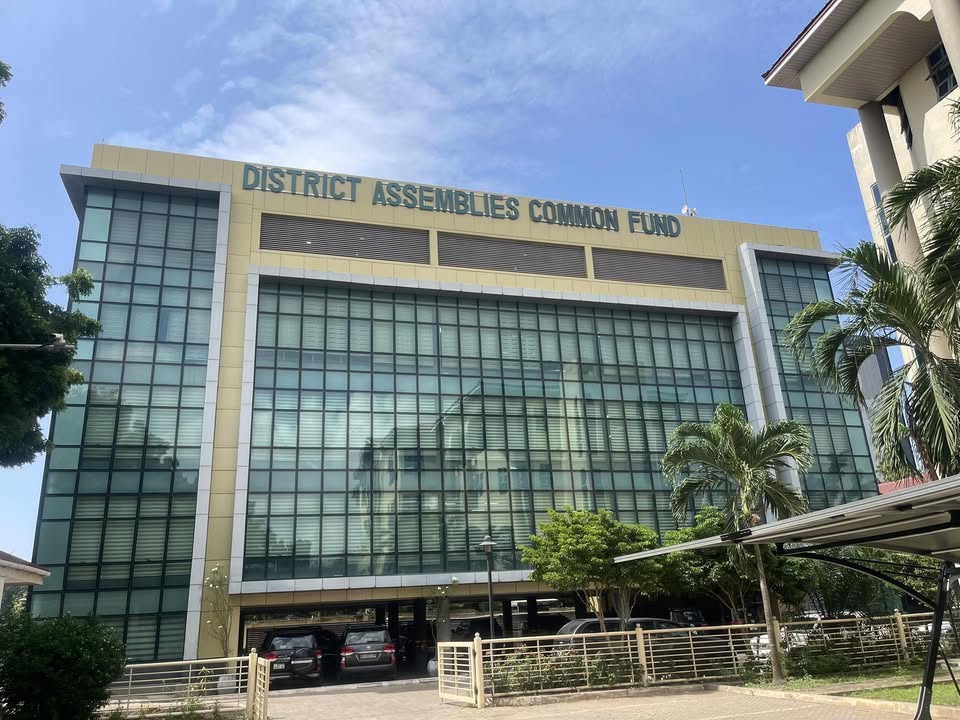
The District Assemblies Common Fund (DACF) stands as one of the most significant pillars of Ghana’s Fourth Republic, designed specifically to ensure that development is not an administrative favour but a constitutional right for local government. Yet, an enduring and increasingly contentious practice persists: the direct allocation of portions of this fund to Members of […]
President Mahama’s 2026 State of the Nation Address: 20 Key 2025 Commitments to Monitor

On February 27, 2026, President Mahama will deliver the second State of the Nation Address under his second term presidency. Last year, just few weeks after his swearing-in, he delivered the first address before Parliament. In that address, he highlighted the challenges that his new government inherited and faced due to gross economic mismanagement and […]
Applied Comparatio; A Tool for Fairness in Compensation Management

Compensation remains one of the most sensitive and strategically consequential mandates within organisational management. Whether embraced or resisted, pay decisions frequently generate tension because they sit at the intersection of equity, justice, performance, and organisational culture. As IMANI’s Fellow, Casely Ato Coleman contends, compensation management is inherently multidimensional, requiring leaders to balance technical design, ethical […]
Analysing a Season of Strikes in Ghana; A Multi Disciplinary Perspective

Industrial action has, over the past two decades, become a recurrent feature of Ghana’s public sector labour relations system. As IMANI’s Fellow, Casely Ato Coleman argues, disputes over compensation and conditions of service often reflect deeper perceptions of inequity in pay administration and benefits management. Questions of fairness, transparency, and consistency in the determination of […]
Corruption in Ghana: Stagnation Amid Institutional Promises – CPI 2025 Review
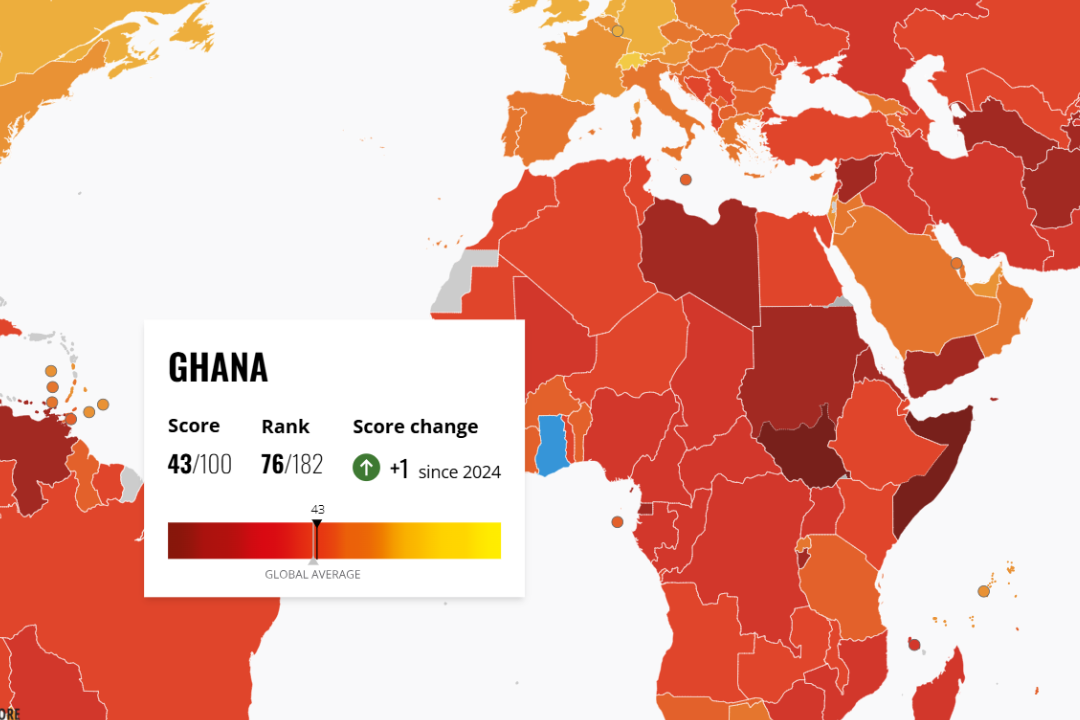
Ghana has recorded a marginal improvement in the 2025 Corruption Perceptions Index (CPI), scoring 43 out of 100, up from 42 in 2024. While this places the country above the Sub-Saharan African regional average of 32, Ghana remains below its 2014 peak score of 48 and continues to trail regional leaders such as Seychelles, Cape […]
Ghana’s 24-hour Economy Needs Systems, Not New Authourities
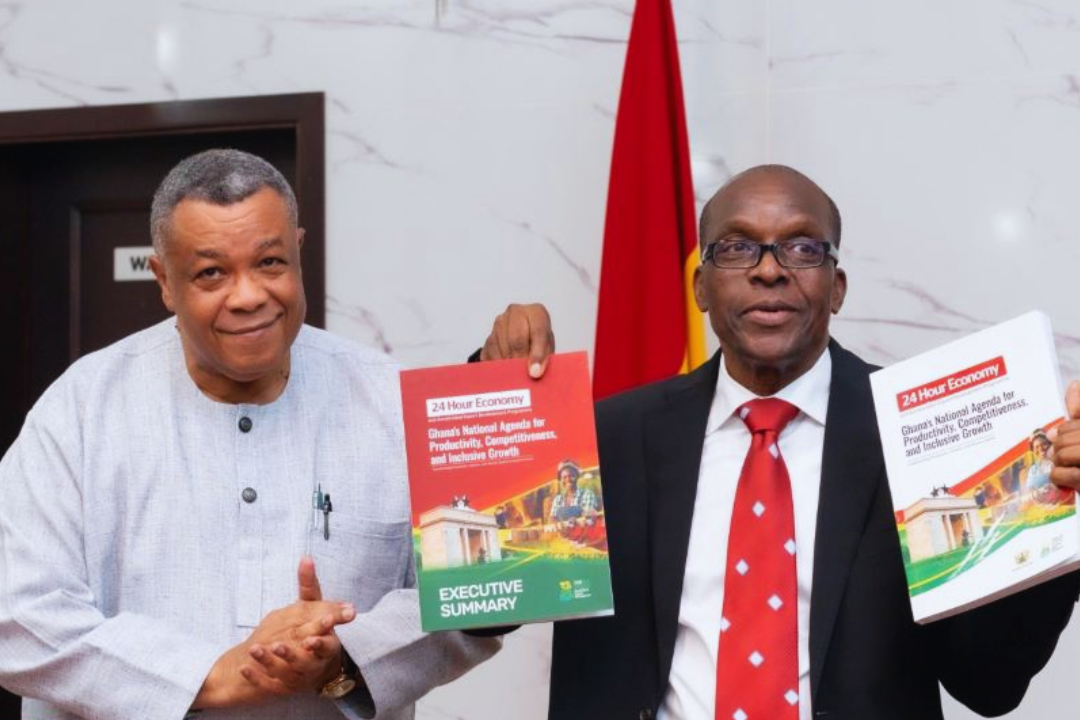
Last week, the Parliament of Ghana took a decisive step by passing the 24-Hour Economy Authority Bill, establishing a corporate body to oversee and coordinate the government’s flagship 24-hour economy and accelerated export development programme. On the surface, the move signals a serious commitment to economic transformation. However, a deeper look at Ghana’s recent governance […]
Internal Party Democracy and the Delegates System: Why More Votes Don’t Guarantee Cleaner Primaries

The dust has settled on the New Patriotic Party’s recent presidential primary, yet the atmosphere remains thick with unresolved questions. While the election of Dr. Mahamudu Bawumia as flagbearer for the 2028 contest set a historic precedent, the mechanism of his victory, the entrenched delegate system, though expanded for the 2026 primary, has once again […]
IMANI Brief: Closing the Verification Gap in the ECG Franchise Officer Rollout

Executive Summary The deployment of Franchise Officers is a significant step toward improving revenue collection. However, the current verification protocol, relying on physical ID cards and paper letters, introduces a “Verification Void.” Without a verifiable “Source of Truth,” customers are vulnerable to social engineering and financial fraud. 1. The Problem: The “Visual Trust” Fallacy The […]
Operational & Fiscal Implications of L.I. 2512 and the Mandate for Real-Time ID Verification

DATE: January 29, 2026 TO: Ministry of Communications and Digitalisation / National Identification Authority (NIA) / Bank of Ghana Executive Summary The passage of the Fees and Charges (Miscellaneous Provisions) (Amendment) Regulations, 2025 (L.I. 2512) marks a pivotal shift in the National Identification Authority’s (NIA) operating model, moving from a fully subsidized public good to […]
We Must Choose Law over the Ceremonial Peace Pact

Still licking wounds of a stinging electoral defeat? The New Patriotic Party (NPP) finds itself at a crossroads in an urgent attempt to resuscitate the party with an early presidential primary. The stage is now set for the January 31 primaries. The atmosphere of the internal democratic exercise to select a flagbearer for the 2028 […]
Economies Run on Wheels: Yet, Ghana’s Growth is Stuck in Traffic

The invention of the wheel was civilization’s first great “time machine.” It literally allowed us to shrink distance: to move more than we could carry and travel further than we could walk. From the steam engines of the British Industrial Revolution to the Interstate Highways in the US; the Boeing, Airbus and Antonov to the […]
“The Committee Endorses Proportional Representation.” Let’s Discuss

For three decades, Ghana’s parliamentary elections have been conducted under the first-past-the-post (FPTP) system. This arrangement, rooted in single-member constituencies, has provided the country with a measure of stability and unity in a multi-ethnic and multi-religious society. By compelling candidates to appeal to broad constituencies, the system has fostered national cohesion and discouraged the fragmentation […]
An Assessment of Ghana’s Tourism Sector in 2025- IMANI

Tourism is one of the important pillars in Ghana’s economy. Before the COVID-19 pandemic in 2020, tourism contributed approximately 5% to GDP, with corresponding receipts estimated to be US$3,760.98 million and supporting 662,667 jobs directly and indirectly. It was the fourth-largest source of foreign exchange earnings after Cocoa, Gold, and Oil & Gas[1]. In the […]
IMANI Vice President Bright Simons Named Among New African Magazine’s 100 Most Influential Africans for 2025

IMANI Centre for Policy and Education has welcomed the recognition of our Honorary Vice President, Bright Simons, who has been named among New African Magazine’s 100 Most Influential Africans for 2025. This distinction underscores his far-reaching impact on governance, public policy, and innovation across the continent. The annual list highlights Africans whose ideas, leadership, and work […]