By: Kay Codjoe, IMANI Associate and Writer
A country that requires motorists to wear seatbelts cannot reasonably leave passengers crossing its rivers to negotiate their survival with the currents. Yet, for years, that contradiction has characterised Ghana’s inland water transport system, where the distance between an ordinary journey and a family tragedy can be measured in seconds.
The Ghana Maritime Authority’s (GMA) “No Life Jacket, No Journey” initiative represents a welcome correction to this dangerous culture. Under the leadership of Director-General Dr Kamal-Deen Ali, the Authority is pursuing a combination of enforcement, public education, community engagement and subsidised protective equipment.
But the real significance of this intervention extends beyond life jackets. It raises fundamental questions about regulatory responsibility, transport inequality, institutional accountability and the value Ghana places on lives outside its major urban centres.
Consider the communities of Azizanya, Alorkpem, Aflive and Azizakpe in the Ada East District. For residents, crossing water is neither recreational nor optional. It is how children reach school, traders access markets and families obtain essential services.
Their safety should never depend on geography.
Reports of improving compliance are encouraging. Some operators who initially resisted the directive now recognise its necessity. The Authority has also extended educational activities to communities along the Black Volta, established a satellite office in Wa and initiated further institutional arrangements in the Afram Plains.
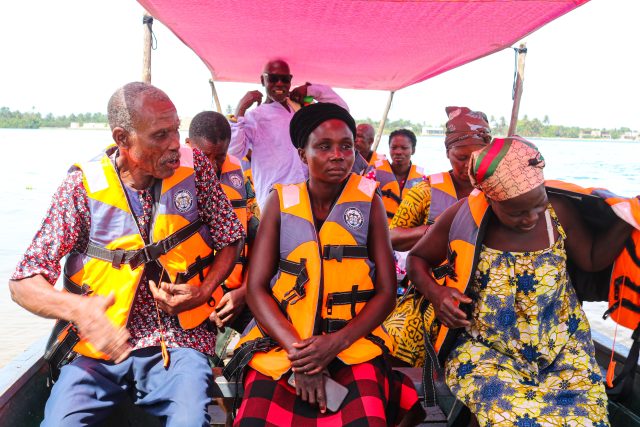
These developments suggest a regulator increasingly willing to move beyond Accra and confront operational realities directly.
Nevertheless, an uncomfortable contradiction demands attention.
During a reported crossing between Ada Foahwem and Alorkpem, some passengers travelled without protective equipment because the vessel lacked sufficient jackets. More disturbing was the sight of nursing mothers wearing life jackets while their babies remained unprotected.
What exactly does universal safety mean when the smallest passenger is excluded?
A policy that insists on compliance must make compliance practically attainable. Infant and child-sized flotation devices cannot remain supplementary considerations. They must form part of minimum vessel safety requirements, alongside appropriate equipment standards, inspection procedures and passenger capacity controls.
The reported distribution of 465 subsidised jackets across selected communities is a useful beginning. However, without a publicly established assessment of passenger volumes, operational vessels and equipment requirements, that figure cannot establish whether coverage is adequate.
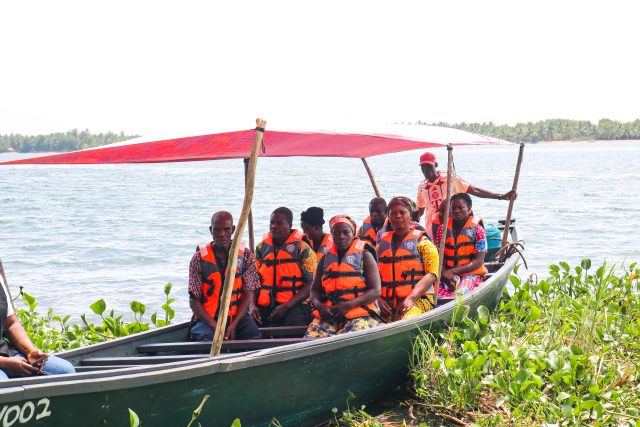
Ghana needs measurable safety outcomes, not distribution statistics mistaken for success.
The financial dimension deserves equal attention. Boat operators have acknowledged the benefits of subsidies while explaining that limited capital prevents them from purchasing sufficient equipment.
Government should consider targeted support linked to verified vessel registration, inspection compliance and passenger capacity. Such assistance must be transparent, auditable and structured to prevent public subsidies becoming private windfalls.
There is also a neglected public health dimension. Complaints about dirty, uncomfortable jackets should prompt proper cleaning, maintenance and replacement standards. Enforcement cannot sustainably rely on compelling passengers to wear equipment whose condition discourages compliance.
More fundamentally, Ghana needs a reliable inland water transport safety database. How many vessels operate nationally? How many passengers travel daily? What proportion of boats possess adequate protective equipment? How many fatalities involve passengers without life jackets?
Without credible answers, regulators cannot confidently measure risk or demonstrate improvement.
The GMA should publish periodic compliance assessments, incident trends, inspection outcomes and enforcement statistics. Independent scrutiny would strengthen, rather than diminish, public confidence.
Schools, traditional authorities and boat associations must also become permanent partners in safety education. A child who understands why a life jacket matters may become the most effective advocate for its use at home.
Ultimately, maritime safety must be treated as a continuing public obligation, not a seasonal campaign.
Dr Ali’s administration deserves recognition for advancing enforcement and extending engagement into previously vulnerable corridors. The next test is whether these interventions produce lasting institutional discipline, adequate equipment and demonstrably fewer preventable deaths.
A river crossing should be a journey between two communities, never a wager between life and death.
And no Ghanaian child should have to depend on a mother’s embrace as a substitute for a life jacket.

Ghana’s Waterways Must No Longer Be Corridors of Preventable Death
By: Kay Codjoe, IMANI Associate and Writer
A country that requires motorists to wear seatbelts cannot reasonably leave passengers crossing its rivers to negotiate their survival with the currents. Yet, for years, that contradiction has characterised Ghana’s inland water transport system, where the distance between an ordinary journey and a family tragedy can be measured in seconds.
The Ghana Maritime Authority’s (GMA) “No Life Jacket, No Journey” initiative represents a welcome correction to this dangerous culture. Under the leadership of Director-General Dr Kamal-Deen Ali, the Authority is pursuing a combination of enforcement, public education, community engagement and subsidised protective equipment.
But the real significance of this intervention extends beyond life jackets. It raises fundamental questions about regulatory responsibility, transport inequality, institutional accountability and the value Ghana places on lives outside its major urban centres.
Consider the communities of Azizanya, Alorkpem, Aflive and Azizakpe in the Ada East District. For residents, crossing water is neither recreational nor optional. It is how children reach school, traders access markets and families obtain essential services.
Their safety should never depend on geography.
Reports of improving compliance are encouraging. Some operators who initially resisted the directive now recognise its necessity. The Authority has also extended educational activities to communities along the Black Volta, established a satellite office in Wa and initiated further institutional arrangements in the Afram Plains.
These developments suggest a regulator increasingly willing to move beyond Accra and confront operational realities directly.
Nevertheless, an uncomfortable contradiction demands attention.
During a reported crossing between Ada Foahwem and Alorkpem, some passengers travelled without protective equipment because the vessel lacked sufficient jackets. More disturbing was the sight of nursing mothers wearing life jackets while their babies remained unprotected.
What exactly does universal safety mean when the smallest passenger is excluded?
A policy that insists on compliance must make compliance practically attainable. Infant and child-sized flotation devices cannot remain supplementary considerations. They must form part of minimum vessel safety requirements, alongside appropriate equipment standards, inspection procedures and passenger capacity controls.
The reported distribution of 465 subsidised jackets across selected communities is a useful beginning. However, without a publicly established assessment of passenger volumes, operational vessels and equipment requirements, that figure cannot establish whether coverage is adequate.
Ghana needs measurable safety outcomes, not distribution statistics mistaken for success.
The financial dimension deserves equal attention. Boat operators have acknowledged the benefits of subsidies while explaining that limited capital prevents them from purchasing sufficient equipment.
Government should consider targeted support linked to verified vessel registration, inspection compliance and passenger capacity. Such assistance must be transparent, auditable and structured to prevent public subsidies becoming private windfalls.
There is also a neglected public health dimension. Complaints about dirty, uncomfortable jackets should prompt proper cleaning, maintenance and replacement standards. Enforcement cannot sustainably rely on compelling passengers to wear equipment whose condition discourages compliance.
More fundamentally, Ghana needs a reliable inland water transport safety database. How many vessels operate nationally? How many passengers travel daily? What proportion of boats possess adequate protective equipment? How many fatalities involve passengers without life jackets?
Without credible answers, regulators cannot confidently measure risk or demonstrate improvement.
The GMA should publish periodic compliance assessments, incident trends, inspection outcomes and enforcement statistics. Independent scrutiny would strengthen, rather than diminish, public confidence.
Schools, traditional authorities and boat associations must also become permanent partners in safety education. A child who understands why a life jacket matters may become the most effective advocate for its use at home.
Ultimately, maritime safety must be treated as a continuing public obligation, not a seasonal campaign.
Dr Ali’s administration deserves recognition for advancing enforcement and extending engagement into previously vulnerable corridors. The next test is whether these interventions produce lasting institutional discipline, adequate equipment and demonstrably fewer preventable deaths.
A river crossing should be a journey between two communities, never a wager between life and death.
And no Ghanaian child should have to depend on a mother’s embrace as a substitute for a life jacket.
Related Posts
Ghana’s Digital Health Transition: From DHIMS1 and DHIMS2 to LHIMS, GHIMS and the 2026 Hosting Crisis
The AFCFTA Ring Has Fifty-Four Flags and Zero Referees
More News/Articles
Ghana’s Waterways Must No Longer Be Corridors of Preventable Death
Ghana’s Digital Health Transition: From DHIMS1 and DHIMS2 to LHIMS, GHIMS and the 2026 Hosting Crisis
The AFCFTA Ring Has Fifty-Four Flags and Zero Referees
Subscribe to our newsletter