Introduction
The USAID freeze by the Trump administration has sent shockwaves across aid dependent nations especially in sub-Saharan Africa. The action through an executive order imposed a 90-day pause almost all US foreign aid project with the objective of restructuring the entire program to ensure efficiency and possibly rope it under the control of the State Department. Although allocation is less than 1% of the annual federal budget, the freeze on the USD41.6 billion program has sparked global concerns on covered programs notably, PEPFAR, a multimillion HIV/AIDS patients life-saving program.
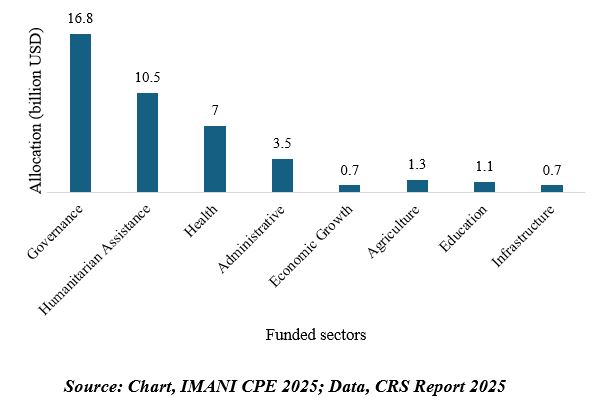
Fig.1: Sectors funded by USAID 2023 budget
Dire impact of the freeze in Africa
Of the top 10 biggest recipient countries of the aid program in 2023, five of them were in sub-Saharan Africa. The countries are, Ethiopia, Somalia, Democratic Republic of Congo, Nigeria, and South Sudan, receiving $1.6 billion, $1 billion, $0.9 billion, $0.8 billion, and $0.7 billion respectively. The funding cut to PEPFAR threatens the lives of hundreds of thousands of HIV/AIDS patients in South Africa, Ethiopia, Tanzania, among others. Uganda’s Ebola tracing and screening program is said to be negatively impacted, scaring a rise in infections across the country and central and eastern Africa.
Ghana and the USAID
Ghana has had a significant partnership with the aid program which support critical sectors like health, education, agriculture and food security, economic growth and trade, and governance. The country receives approximately USD150 million in support annually. For instance, in 2024, the agency announced a USD45 million five-year support package, Integrated Health Partnership (IHP), to improve adolescent and sexual reproductive health rights, maternal and child health, and nutrition.
Reports suggest that about USD137 million has been requested from the agency by the government to support programs in critical sectors of the economy. But suspension of activities and programs of the agency has hit the country the hardest. It puts the IHP on tenterhooks. Similar supported programs and actions like the last mile delivery of essential medical supplies to the north regions, public health supply chain management, and existing malaria treatment and HIV/AIDS prevention have been sternly affected.
The agriculture sector, which relies heavily on support from USAID also stands to be negatively impacted by the freeze. In 2023, the agency provided about USD25 million in financial support to MSMEs agricultural productivity and food security. The same year, the agency, through its Farmer Support Activity, provided $7 million to 17,000 vulnerable farmers. Additionally, over 33,000 agribusinesses have been supported since 2020 to access over USD204 million in funding from partner financial institutions.
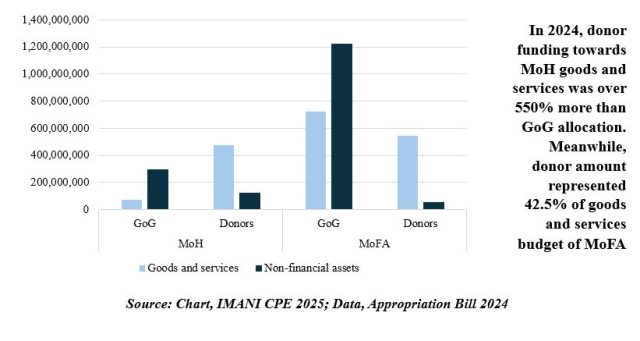
Fig 2: Approved budget amount from GoG and Donors to health and agriculture ministries
Government’s response measures
Ghana’s 30-day old new government which inherited the worst economic crisis from the erstwhile government suffers a great pensiveness in implementing its bold “reset agenda” programs amidst USAID freezes. As an aid dependent economy, the 90 days freeze is likely to affect the realization of the new government’s 120 days “social contract” with the people, especially on the promises to abolish the Covid-19 and electronic transaction levies which were the mainstay of the erstwhile government during the 2022/23 financial and economic crisis. The debt overhang and weakened currency are likely to compound the fiscal stress of the new government.
Nevertheless, the funding gap in critical sectors of the economy left by the freeze can be filled by robust cost-saving measures. First, waste prevention and project efficiency. The whole objective of the USAID freeze is to streamline strategies to reduce wasteful expenditure. This could be replicated across the various critical sectors like health, education, and agriculture which depend on aid financing. Between 2021 and 2023, Ghana lost ¢4.9 billion to financial irregularities, which was caused primarily by tax and cash irregularities. The health and agriculture ministries were among the top five ministries cited to be most fiscally reckless. Mending the tax and revenue net will secure cash inflows. Specifically, PFM structures in MDAs must ensure efficient use of non-tax revenue. For instance, the Ministry of Health estimates of expenditure of IGF in the 2024 Appropriation Bill amounted to ¢4 billion out of which ¢3 billion was directed towards goods and services.
Second, the government should uncap and cease immediately the collateralization of the GET Fund levy and NHIL, as promised, to make available resources to bridge the financing gap left by the freeze.
Lastly, the government should fast-track the establishment of an independent fiscal council to streamline government expenditure and ensure efficiency in resource allocation and utilization. The independent fiscal council should have the power to supervise and greenlight the macro-fiscal planning and expenditure of the Ministry of Finance, and all other MDAs.
Conclusion
With the USAID undergoing structural and focal changes, aid-dependent nations should expect a stringent USAID when unfrozen. Whereas the freeze may open new international cooperation doors particularly between Africa and China and the ASEAN in the short term, it does not eliminate Africa’s long path dependency socio-economic structures.
The freeze offers a critical juncture for aid dependent nations in sub-Saharan Africa to reimagine development assistance and place strong emphasis on homegrown solutions to their development woes.
BY: Ransford Brobbey, Research Associate, IMANI Africa