The 2025 Ghana Industrial Summit and Exhibition & BEST Forum officially commenced on Tuesday, 16th September 2025, at the Palm Royal Beach Hotel. The event, hosted by the Association of Ghana Industries (AGI), brought together government officials, captains of industry, diplomats, academia, development partners, and the media under the theme: “Unlocking Industrial Potential – Strategic Approaches for Ghana’s Economic Transformation.”
Welcome Address – Dr. Humphrey Ayim-Darke, President of AGI
Dr. Humphrey Ayim-Darke expressed appreciation for the presence of dignitaries, including Members of Parliament, Ministers of State, diplomatic representatives, industry leaders, and partners. He highlighted the AGI’s consistent role over the past decade in championing Ghana’s industrialization agenda through summits, exhibitions, and policy dialogue. In his remarks, Dr. Ayuda underscored several key points.
- Industrialization as a Necessity. He stressed that industrialization is not merely an aspiration but a national necessity, citing Ghana’s natural resources, human capital, and strategic location as strong foundations for building a competitive manufacturing hub in West Africa.
- Collaboration for Transformation: He emphasized AGI’s collaboration with the Ministry of Environment, Science, Technology and Innovation (MESTI). He also called for deeper collaboration with other MDAs to advance industrial growth.
He welcomed government’s 24-hour economy policy but urged that it be backed by deliberate measures such as reliable energy, efficient logistics, and competitive tax exemptions to make continuous production viable. He called for smooth transition of beneficiaries from the 1D1F initiative into the 24-hour economy framework.
He raised concerns about unfair parallel imports, particularly beverages and rubber, which undermine local industries by bypassing standards and duties, and urged stricter enforcement of import regulations and border monitoring to protect local manufacturers.
He also advocated for a fair balance between electricity tariff pricing and investments in infrastructure to enhance industrial competitiveness under PURC’s multi-year tariff review framework. He reiterated the need for VAT rationalization to ease the burden on businesses. He urged the Presidency to fast-track the promised Public-Private Dialogue (PPD) sessions to deepen collaboration on economic reforms.
Dr. Ayuda concluded by calling on government, private sector, academia, and development partners to work collectively to translate industrial strategies into tangible results, more jobs, productivity, stronger businesses, and a resilient Ghanaian economy.
Keynote Speech by Hon. Yussif Sulemana, Deputy Minister, Ministry of Environment, Science and Technology
Hon. Yussif Sulemana highlighted Ghana’s long tradition of knowledge and innovation, but acknowledged the gap between research institutions and industry, which has limited the commercialization of local inventions. Closing this gap, he stressed, is essential for competitiveness, job creation, and sustainable economic growth.
The Deputy Minister pointed to government efforts, including the National Research Fund (seeded with GH¢15 million) to support applied research, and the 24-hour economy policy, designed not just to extend business hours but to foster an enabling ecosystem where industry, technology, and innovation thrive across sectors.
He noted the Association of Ghana Industries’ (AGI) inputs, particularly the need for financial support, tax reforms, fair trade practices, currency stability, and protection against unfair imports, and assured that government was addressing concerns such as border controls and smuggling to safeguard local industries.
In closing, he called for stronger partnerships between government, industry, and research institutions, assuring that the government is committed to creating the right environment for businesses to grow, innovations to be commercialized, and jobs to be created. He then officially declared the summit and exhibition open.
Statement by HE. Jonas Claes, Chargé d’Affaires of the European Union in Ghana
Jonas Claes, Chargé d’Affaires of the European Union in Ghana, emphasized the EU’s longstanding commitment to Ghana’s industrial growth, noting that the Union has been a consistent partner of the summit for six consecutive years. The EU, he highlighted, is Ghana’s largest trading partner, with trade volumes rising to €6.4 billion in 2024. Under the Economic Partnership Agreement (EPA), Ghana enjoys duty- and quota-free access to EU markets, presenting vast opportunities for exporters, especially as the EU market is valued at nearly €2 trillion.
Mr. Claes underlined that the Partnership not only creates opportunities for Ghanaian exports but also lowers the cost of imported machinery and technology while supporting consumer affordability. He affirmed the EU’s particular interest in Ghana’s push for value addition and made-in-Ghana products, aligning with this year’s theme of unlocking industrial potential.
He further highlighted the EU’s Global Gateway strategy, which is channeling around €1 billion in investments (2021–2027) into Ghana’s infrastructure and sustainable development projects. This initiative, he noted, strengthens competitiveness, secures supply chains, and promotes green, sustainable industrial production.
He invited participants to visit the EU Pavilion at the summit, which showcases programs and partnerships that support Ghanaian industries.
Closing his remarks, Mr. Claes reaffirmed the EU’s role as a strategic, equal partner in Ghana’s industrialization journey, committed to building competitiveness, sustainability, and future readiness together.
Remarks by Ag. Chief Executive, VRA – Ing. Edward Ekow Obeng-Kenzo
At the summit, Ing. Edward Ekow Obeng-Kenzo underscored the central role of energy in Ghana’s industrialization drive. He noted that VRA’s mandate goes beyond generating electricity; it is about providing reliable, sustainable, and environmentally friendly power that fuels productivity, supports enterprises, and drives innovation. Highlighting VRA’s 64-year legacy, he pointed to ongoing diversification in the Authority’s energy portfolio and referenced the Value-Added Services initiative, launched at last year’s summit, which provides tailored support to industries and businesses.
Ing. Kenzo commended AGI for its strong leadership in championing industrial interests and invited participants to join Day 3 sessions on Sustainable Power and Industrial Growth, which will explore strategies to align energy with Ghana’s economic transformation agenda.
He closed with a call for bold engagement, creativity, and cross-sector collaboration, stressing that the outcomes of this summit should resonate beyond the conference halls, into factories, communities, and across borders, shaping inclusive and sustainable growth for Ghana.
Remarks by the UK High Commissioner’s represented by Samira Mbatha-Grebin
Speaking on behalf of the British High Commissioner, Samira Mbatha-Grebin, Deputy Development Director at the UK High Commission in Accra, emphasized two shared priorities between Ghana and the UK: harnessing research and innovation for sustainable development and driving industrial transformation for inclusive growth. She highlighted ongoing UK–Ghana collaborations, including the Knowledge Transfer Partnership, which is already yielding results in areas such as palm oil testing for safer exports and nutritious cereal development for local and regional markets. She also referenced the UK’s program, which supports pharmaceuticals, agribusiness, and automotive industries, and noted recent visits by the UK Development Minister to Ghanaian firms demonstrating innovation, job creation, and strong social impact, particularly in women’s employment and health security. She also pointed to UK-backed research initiatives such as the Research Innovation System of Africa Fund and support for the operationalization of Ghana’s National Research Fund.
In closing, she commended the forum as the “right people, right expertise, and right policy leadership” gathered in one place, reaffirming the UK’s strong commitment to advancing research–industry collaboration and supporting Ghana’s industrial transformation.
Remarks by Ghana Enterprises Agency (GEA)
Delivering a statement on behalf of Ms. Margaret Ansei, Chief Executive Officer of the Ghana Enterprises Agency (GEA), the representative emphasized GEA’s commitment to Ghana’s industrial transformation agenda, especially through the empowerment of MSMEs, which form the backbone of the economy by employing a majority of the workforce and contributing significantly to GDP. She outlined three pillars of GEA’s strategy.
- Access to Finance and Markets. GEA is working with development partners to expand financing and create structured market pathways. Through its 16 regional offices and 226 business advisory centers, the Agency is helping enterprises access capital, meet certification standards, and connect to higher-value supply chains locally and abroad.
- Skills and Capacity Development. GEA provides training, technical assistance, and management support to enhance productivity, competitiveness, and business governance.
- Technology, Standards, and Industrialization. The Agency is promoting digitalization in enterprise operations (payments, production management, e-commerce), alongside compliance with standards and sustainability practices, to lower costs and widen market reach.
She stressed that these interventions are not isolated but form a coherent engine of transformation, laying the structural foundation for inclusive, resilient, and globally competitive industrial growth.
Closing her address, she reaffirmed that Ghana’s future transformation depends on empowering MSMEs. With strong partnerships and disciplined execution, she said, Ghana can unlock its industrial potential and secure prosperity for generations to come.
Panel 1 Presentation
Remarks by Dr. Peter Boamah Otokunor, Director, Presidential Initiatives in Agriculture and Agribusiness at the Office of the President
Dr. Peter Boamah Otokunor highlighted that the summit’s theme aligns directly with President Mahama’s vision of building an inclusive and industrialized Ghana anchored on agriculture, innovation, and strategic partnerships.
He stressed that no country has achieved economic transformation without strong industries, and for Ghana, the path forward is to connect farms to factories, and factories to domestic and global markets. Agriculture, he said, is the gateway: Ghana must transition from exporting raw produce to processing, packaging, and branding goods that can compete internationally. Key government initiatives such as Feed Ghana are designed to align food production with industrial demand, ensuring staples like maize, cassava, oil palm, and rice become reliable inputs for local industries rather than surplus exports. The government is also investing in agro-industrial infrastructure, including irrigation, storage, and processing facilities, to create sustainable value chains, reduce risks for investors, and guarantee consistent raw material supply.
Dr. Otokunor also emphasized the importance of human capital development, citing technical and vocational education and partnerships with the private sector as key to building a skilled workforce. He underlined that factories must not only produce goods but also create decent, well-paying jobs that lift households out of poverty and provide hope for youth.
Acknowledging industry challenges, access to finance, energy costs, and regulatory hurdles, he affirmed that government is working to streamline processes, de-risk investments, and ensure predictable policies. President Mahama, he said, envisions government as a partner and enabler of industry, not a barrier.
Looking ahead, Dr. Otokunor announced plans for a public-private dialogue platform to strengthen collaboration and find joint solutions to industrial challenges. He concluded by calling for united efforts to ensure Ghanaian industries meet local demand while expanding into export markets, making “Made in Ghana” a global mark of quality and value addition.
Dr. Ishmael Nii Dodoo’s presentation on ‘The 24-Hour Policy, A Panacea For Industrial Development? Progress So Far’.
Dr. Ishmael Nii Dodoo, Head of Innovative Partnerships and Aid Markets, delivered an in-depth presentation on the government’s 24-Hour Economy policy. He clarified misconceptions, stressing that the initiative is not merely about night shifts but about creating a robust, highly productive economy where Ghanaian goods and services are competitive and in demand locally, regionally, and globally. The 24-hour economy seeks to deconstruct Ghana’s economic model, based on raw material exports and heavy imports, and rebuild it into a self-reliant, industrialized system that drives exports, job creation, and inclusive growth.
Dr. Nii Dodoo reminded participants that Ghana once had over 70 thriving industries (e.g., Volta Corned Beef, Akasanuma radios) and can reclaim that legacy. Using examples like cassava, he illustrated how one product can generate multiple value chains, from flour and starch to ethanol and medical products.
The initiative is built on three pillars:
- Production transformation, adding value, expanding value chains, ensuring quality and global standards.
- Market access, reducing post-harvest losses, investing in storage, warehousing, logistics, and market connectivity.
- Workforce development aligning training with industry demand, enhancing skills, and driving a mindset shift.
To operationalize this, government has designed eight programs under the 24-hour economy, covering agriculture, manufacturing (pharmaceuticals, textiles, agro-processing, machinery), construction, workforce training, the creative industries, and financing partnerships with the private sector.
He highlighted the economic potential in areas like pharmaceuticals (where Ghana currently imports 97% of its medicines), food imports (over $3.5 billion annually), and even local consumption habits (e.g., heavy reliance on imported intestines).
On support mechanisms, Dr. Nii Dodoo announced a freshly signed $500 million SME facility fund with the Arab Bank for African Development, aimed at providing concessional loans below 10% interest, with 3–5 years moratorium and no collateral requirements, channeled through associations like AGI. Government is also investing in 20 agro-ecological parks and 7 industrial parks, including specialized corridors for cassava, rice, garments, machinery, and pharmaceuticals, to reduce risks for industry and encourage aggregation. Strategic reforms to the procurement law will further ensure that Ghana-made goods feature in public procurement.
He stressed that Ghana’s goal is to position itself as a production hub for West Africa’s 425 million people, tapping into the region’s $1.3 trillion economy. Opportunities will especially open up for young entrepreneurs in agriculture, textiles, technology, and the creative sector.
He concluded that the 24-Hour Economy provides a blueprint for transformation, anchored in incentives, infrastructure, financing, and workforce readiness, and called on industry players to engage actively in driving the agenda forward.
Dr. Peter Boamah Otokunor’s Presentation on ‘Large Scale Agriculture, A Strategic Tool For Industrial Competitiveness’.
Dr. Peter Boamah Otokunor emphasized that Ghana cannot industrialize without a strong agricultural base, echoing a vision first set out at independence and now advanced under the President’s Agriculture for Economic Transformation Agenda. The goal is to shift from subsistence farming to commercial-scale production that directly fuels factories, supports exports, and sustains a 24-hour economy.
Dr. Otokunor warned that fragmented smallholder farming cannot supply industries at the right cost, quality, and reliability, creating supply chain gaps that force companies to import. Large-scale, organized farming, by contrast, lowers costs through economies of scale, guarantees steady supply, and strengthens value chains.
Drawing from a visit to Ivory Coast’s palm sector, he highlighted the transformative impact of coordinated plantations and processing systems, stressing that Ghana must replicate this approach. Current government initiatives include:
- Coconut expansion – distribution of 3 million seedlings to establish 20,000 hectares, with a long-term plan for 150,000 hectares, backed by AfriCoconut board.
- Cocoa renewal – 200,000 new hectares with a focus on value addition to capture more of the $542 billion global cocoa market.
- Shea and cashew innovation – new grafted varieties yielding in 2–3 years instead of 20, with 5,000 seedlings already distributed.
- Cashew and palm scale-up – aimed at expanding processing and exports.
He stressed that these interventions are carefully designed to integrate farming with industrial processing, reduce import dependence, and capture more value locally. Achieving this vision, however, requires public-private partnerships, investment in mechanization, irrigation, storage, and processing plants, and a mindset shift; treating agriculture not as subsistence but as industry.
Dr. Otokunor concluded that Ghana’s economic transformation will be won or lost in the fields. If farming remains small and fragmented, Ghana will remain import-dependent and uncompetitive. But if scaled and modernized, agriculture will power factories, generate exports, create jobs, and position Ghana as a hub of African industrialization.
Mr. Samuel Ntim – Adu’s Presentation on ‘The 24hour Economy In Operation: The Case Of Poultry Value Chain’.
Mr. Samuel Ntim – Adu, CEO of Yedent Group of Companies, made a strong case for transforming Ghana’s poultry industry into a driver of food security and industrial competitiveness. He noted that Ghana consumes 450,000 metric tons of chicken annually, equivalent to 200 million broilers, yet almost all of it is imported. Meeting this demand domestically would require about 800,000 metric tons of maize and soy feed. Similarly, Ghana spends about $300 million annually on eggs, consuming 75 million crates per year, which translates into demand for 30 million laying hens.
Mr. Samuel Ntim – Adu stressed that despite these clear opportunities, Ghana remains dependent on imports because of structural challenges and entrenched interests that frustrate self-sufficiency. He argued that poultry must be addressed through a food systems approach, where policy, infrastructure, and financing are aligned to unlock the entire value chain.
He revealed that he has been engaging with investors and holds a proposal from one of Africa’s leading poultry companies to establish a modern breeder farm in Ghana using advanced technology. However, he cautioned that “until our leaders are fully on board, this transformation will not work.” Mr. Samuel Ntim – Adu urged government to take the lead in driving structural reforms, creating coherent policies, and positioning poultry as a strategic national priority. Once leadership aligns, he argued, private sector players, financiers, development partners, and communities will follow, just as has happened in Nigeria, Zambia, and South Africa.
He concluded that Ghana has the market, the demand, and the opportunity; what is missing is decisive leadership to transform poultry into a pillar of the 24-hour economy.
Panel 1 Discussion
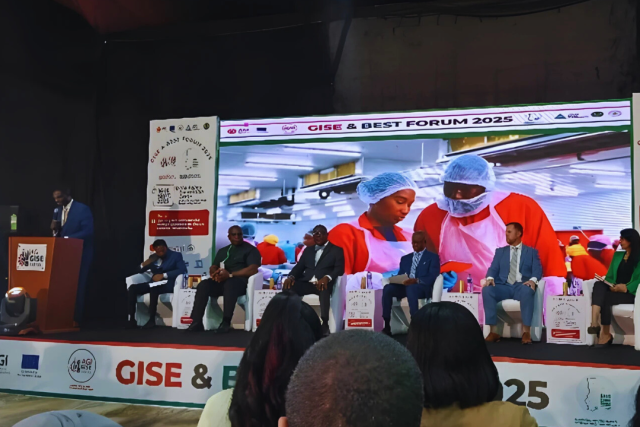
Dr. Ishmael Nii Dodoo explained that the 24-hour economy policy is designed to boost Ghana’s productivity and industrial base by ensuring that goods consumed domestically and across West Africa are increasingly made in Ghana. The policy aims to expand GDP, create at least 1.7 million jobs, with graduates expected to secure employment within six months to a year, restructure industry for efficiency, professionalism, and high-quality production that meets international standards and increase the number of wealthy Ghanaian entrepreneurs, instead of leaving control of major sectors to foreign businesses.
Indicators of progress, he said, would include:
- Made-in-Ghana products dominating markets and shelves.
- Job opportunities available to graduates soon after school.
- Young people equipped with versatile skills to work across sectors.
- Affordable, high-quality local goods, from food to clothing to pharmaceuticals, readily available.
On the role of the private sector, Dr. Nii Dodoo emphasized that the policy is built for them. Opportunities exist in areas such as food imports ($3.5bn) and poultry ($450–500m) that Ghanaians could capture. Government’s role, he said, is to
- provide guaranteed markets through procurement policies (40–60% of state purchases going to local goods).
- Develop enabling infrastructure (irrigation, energy, R&D, seed systems, pharmaceutical centers, logistics).
- Establish land trusts under the Volta Economic Corridor flagship to turn 2 million hectares into a food basket, while converting land ownership into equity for farmers.
He described this as a “game-changer” for wealth creation, urging Ghanaians to change their mindset and take advantage of opportunities. Too often, he warned, foreigners (Turkish, Indian, Chinese) are dominating lucrative ventures while Ghanaian entrepreneurs remain hesitant.
He concluded with a call for mindset change and entrepreneurship, insisting that the 24-hour economy is not just about productivity but also about building Ghanaian wealth and ownership of the country’s economic future.
Dr. Otokunor emphasized that large-scale commercial agriculture is indispensable for industrialization, since industries can only thrive when there is a reliable, steady supply of raw materials. Currently, Ghana’s agriculture remains 92–95% smallholder and subsistence-based, which undermines consistent supply for industry. He argued that the solution is not to abandon smallholders but to organize and integrate them into modern production models. He noted that Ghana must blend smallholder farming with commercial enclaves to achieve scale. Currently, fragmented farming makes aggregation inefficient, buyers cannot travel long distances to collect half-ton harvests of scattered crops. Instead, villages cultivating 1,000 acres should focus on one or two crops collectively (e.g., beans or rice) to create viable supply chains.
On Sustainability and Maintenance Culture, Dr. Otokunor stressed that the President has directed all appointees to put sustainability at the heart of projects. To avoid failures of past initiatives, his office is embedding public-private partnership (PPP) models. For example, Farmer Services Centers, providing mechanization, inputs, and training, are designed as PPPs, ensuring both government and private investors remain committed to long-term operation and profitability.
He concluded that private sector involvement is essential to ensure maintenance and sustainability. Government must lead and provide enabling policies, but without private capital, efficiency, and incentives, projects risk collapse.
Mr. Samuel Ntim – Adu tied the 24-hour economy vision to the poultry sector, stressing that transformation must occur along the entire value chain.
- Seed (genetics): The foundation is high-quality day-old chicks, which come from a technical and specialized breeding process involving grandparent and parent stock. Without this, productivity and competitiveness collapse.
- Infrastructure & Inputs: Poultry requires reliable infrastructure, good feed, processing facilities, and proper marketing systems to be viable.
- Identification of Competent Players: Success hinges on choosing the right actors, not by favoritism or politics, but by competence, experience, and sustainability. Poultry is not simply about raising and slaughtering chickens; it is about organizing the entire chain to deliver quality products consistently to consumers.
- Partnerships & Collaboration: To thrive, Ghana must cultivate the right partnerships, both technical and financial, and leverage resources effectively.
He emphasized that building a sustainable poultry industry under the 24-hour economy will require strategic support from government offices, especially those coordinating agriculture and industry linkages. With the right framework, he argued, poultry can be placed at the center of Ghana’s industrial strategy, creating jobs and reducing imports.
Q&A Session
A participant raised concerns about hoarding and speculation in the agriculture sector, particularly by investors who withhold produce to resell at higher prices during shortages. She noted this practice drives up costs for farmers, consumers, and even government.
Dr. Otokunor Response:
He explained that every investor seeks profit and may delay sales if they expect better returns in the off-season. This behavior thrives because Ghana’s agriculture is still largely rain-fed and seasonal, creating natural gaps in supply. The solution lies in policy interventions that promote off-season production (e.g., irrigation, technology, inputs) to stabilize supply and prevent price spikes. Government must design a competitive market system that limits the ability of speculators to distort prices. He cited recent interventions such as the ban on raw soybean exports and, more recently, restrictions on soybean meal exports to secure feedstock for local poultry farmers. These measures have already helped reduce feed and egg prices, making production more viable.
Prices of commodities reflect risk. Government support from production through processing to marketing can reduce risks, stabilize prices, and ensure affordability for consumers.
Dr. Otokunor broadened the discussion to infrastructure, highlighting water transport as an underused asset. Reviving the Volta Lake transport corridor would ease congestion on the Accra–Kumasi road, reduce costs of moving goods northwards, and strengthen regional trade links with Burkina Faso, Mali, and Niger. The President has directed steps to remodel the water transport company to achieve this.
In conclusion, he stressed that 24-hour economy initiatives, coupled with deliberate government policies, could ensure sustainable, all-season agricultural production and reduce the vulnerabilities that hoarding and speculation exploit.
Panel 2 Presentation
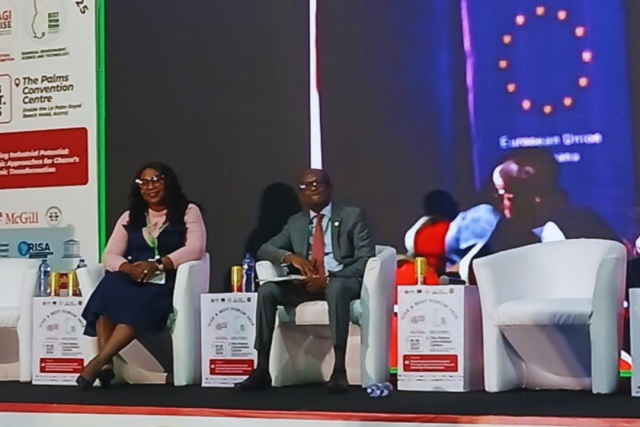
Mary Ankobia, Head of Corporate Banking & Cross-Border Trade), Bank of Africa, representing the Executive Director outlined how SMEs can position themselves to benefit from Ghana’s 24-hour economy initiative. In Ghana, SMEs contribute about 70% of GDP and provide 80% of employment, making them central to economic transformation. Opportunities under the 24-Hour Economy includes extended markets through longer trading hours and new customer segments, boosted export potential, especially within ECOWAS and AfCFTA, greater use of digitalization and adoption of new technologies and increased production cycles, job creation, and space for R&D.
Challenges Facing SMEs includes limited access to financing due to lack of collateral, weak digital adoption and reliance on manual systems, skills gaps in management, ICT, and finance and regulatory bottlenecks, inadequate infrastructure, and limited scale-up capacity.
Bank of Africa’s Support for SMEs includes tailored SME financing facilities (including collateral-free loans of 6–12 months), special incentives for women entrepreneurs, capacity-building programs with IFC on bookkeeping, financial sustainability, and digital adoption and rade facilitation through BOA’s strong regional and global network, enabling easier exports, and fund repatriation. Additional products includes vehicle financing, invoice/LPO discounting, employee personal loans.
Policy Recommendations:
- Establish a special 24-hour SME fund, but administered through banks (not secretariats) for accountability and repayment assurance.
- Ensure infrastructure support, especially reliable power supply, to sustain continuous operations.
Ms. Ankobia emphasized that the 24-hour economy is not merely about working longer hours but about driving efficiency, competitiveness, and growth. She reaffirmed BOA’s commitment to supporting SMEs in financing, trade, and digital transformation to harness the opportunities ahead.
Mr. Anthony Buagbe, Head of SME Unit, Republic Bank, shared how Republic Bank has restructured its approach to SME financing over the past two years, moving from viewing SMEs as just part of financial intermediation to making them a core pillar of the bank’s strategy.
The bank created a dedicated SME unit to bridge the gap between micro-businesses (handled by their microfinance subsidiary) and larger corporates, engaged directly with SMEs and associations (AGI) to better understand both SME challenges and banking challenges.
Identified persistent issues:
- Over-reliance on collateral lending.
- Lack of financial statements from micro-businesses.
- Absence of long-term funding options.
- Limited SME use of banking systems.
He stated that the government and Bank of Ghana must play a role by providing effective financial reforms, expanding credit infrastructure to identify willful defaulters and supporting an enabling environment that reduces cost of funding.
Promoting SME financing requires a deliberate strategic focus by banks, inclusive stakeholder collaboration, customer-centric product design, and a gradual shift away from collateral-based lending. Mr. Anthony Buagbe stressed optimism that these measures, though not exhaustive, can significantly strengthen SME financing and their role in Ghana’s economic transformation.
Q&A
During the Q&A, participants raised concerns about long-term funding, start-up access to finance, waiting times for bank support, and the impact of policy rates.
On Start-ups and Waiting Periods: Ms Mary (Bank of Africa) clarified that while start-ups are often high-risk, banks assess the viability of the business venture and the existence of off-takers before providing support. Vehicle and asset financing facilities are examples of long-term products offered, with repayment schedules tailored to a business’s cash flow (e.g., 48–60 months rather than a fixed two-year tenor). She explained that a relationship with the bank usually begins by opening an account, but exceptional cases exist: even without a prior account, banks may leverage a start-up’s existing banking history with another institution if the business case is strong.
On Policy Rates and Lending Costs: Mr. Anthony (Republic Bank) emphasized that banks are aligning their lending rates with the declining Ghana Reference Rate (GRR). Republic Bank, for instance, offers vehicle financing directly at the GRR (currently 19.86%) without additional margins. He acknowledged challenges with non-performing loans (NPLs) but stressed that banks continue to lend to support economic activity. Mr. Anthony added that Republic Bank allows collateral-free loans by analyzing statements from an SME’s existing bank, even if no prior relationship exists with Republic Bank.
A participant raised concerns about the lack of early-stage support from banks, noting that financial institutions often ignore micro and small businesses until they have grown significantly. She stressed that SMEs need timely partnerships and sustained engagement rather than one-off training or workshops, and asked what practical interventions banks were putting in place to support businesses at the micro level (valued at GHS 5,000–10,000).
Ms. Mary (Bank of Africa) explained that the bank has segmented SMEs into micro, small, and medium categories to better tailor support. Micro and small enterprises are attended to at SME centers across 23 branches, with dedicated officers focusing on their needs. Support is also provided through supply chain financing arrangements with corporates and IFC partnerships, allowing even the smallest businesses to access funds at relatively lower rates. Medium enterprises are often scaled up to access corporate-level products and concessionary financing. She emphasized that SMEs engaged in ESG- or climate-compliant businesses benefit from concessionary interest rates.
Mr. Anthony (Republic Bank) added that their group structure ensures coverage of the full SME value chain. A microfinance subsidiary serves very small businesses (as low as GHS 10,000 turnover), who can later graduate into the SME unit and eventually the corporate segment. Republic Bank also provides long-term financing (up to 10 years) for machinery and infrastructure through Republic Investments Limited.
Report by: Lydia Quist, Research Assistant, IMANI CPE