On Monday 26 May, President John Dramani Mahama met with representatives from various civil society organisations (CSOs) to discuss the formation of a Governance Advisory Council, a key initiative aimed at enhancing transparency and public sector accountability under his administration.
President Mahama described the Council as an “independent watchdog” that will monitor human rights, corruption, and governance performance across public institutions.
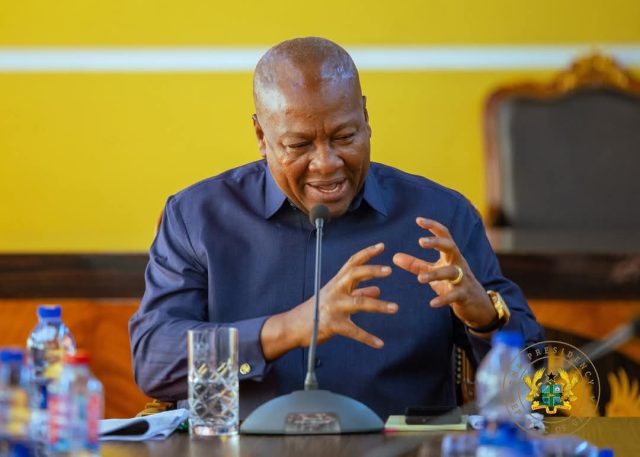
“This is a key promise from my campaign, which is intended to enhance accountability and transform our governance system,” President Mahama told attendees.
“An annual report on human rights, corruption, and governance will be key to transparency and progress. I am committed to creating a transparent, accountable government that reflects the values of our beloved country.”
Franklin Cudjoe Proposes Robust Accountability Measures
Franklin Cudjoe, Founding President of IMANI Africa, welcomed the initiative and urged the President to make the Governance Advisory Council the fulcrum for enforcing accountability across all ministries and public offices.
Mr Cudjoe proposed a seven-point framework designed to promote openness, performance tracking, and citizen engagement:
- Ministers and chief directors should sign on to a shared vision for their departments through a co-created, transparent framework.
- They should commit to open data and adopt a culture of radical transparency.
- Ministries should hold monthly hybrid town hall meetings (both virtual and in-person) to disclose procurement details, performance metrics, milestones, and monitoring updates. Any questions not answered during these sessions should be addressed within a week.
- Citizens who attend or tune in to town halls should be able to enrol digitally as stakeholders in the department’s vision and activities.
- A monthly poll should be conducted to capture stakeholder sentiment. Participation would be limited to those who have attended at least one town hall.
- At the six-month mark, ministries should be recognised for progress and given structured, forward-looking feedback.
- These mechanisms should complement, not replace, formal audits and public financial management (PFM) controls, aiming instead to bring their impact closer to citizens and invigorate their use.
Mr Cudjoe stressed that such citizen-centred reforms would strengthen institutional trust and encourage greater civic involvement in public policy.
Working Group to Refine Council Structure
At the close of the meeting, CSO leaders in attendance nominated a small team to review proposals and recommend concrete ways to operationalise the Governance Advisory Council.
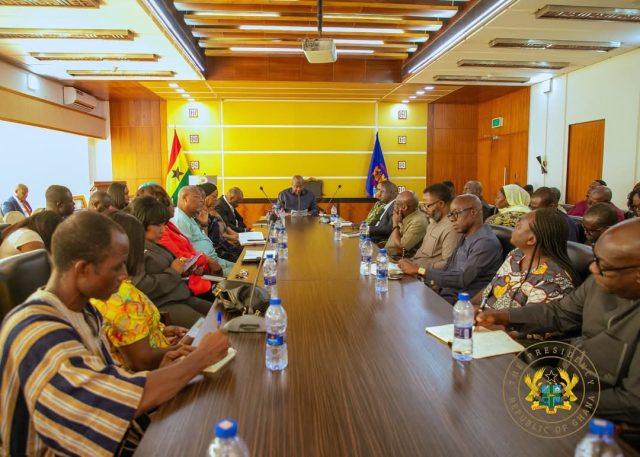
The working group includes Alhaji Ibrahim-Tanko Amidu (STAR-Ghana), Dr Valerie Sawyer, one additional female CSO representative, and Mr Franklin Cudjoe. They are expected to gather further recommendations and submit practical options on how to implement the Council, or advise if the idea should be reconsidered.