For countries late to the industrialisation game, which should include virtually all African states, there have been two main big ideas: import substitution and export promotion.
Soon after independence, nearly all African countries adopted import substitution. It promised “self-sufficiency” and that sounded in the ears of many policymakers very much like “sovereignty”.
Then, in the 1970s, a few Asian countries started to see great success with exports, even as a raft of African countries started flirting with debt crises. Export competitiveness now looked quite enticing. Liberia launched a dedicated export-oriented industrial estate in 1970. Senegal and Mauritius followed almost immediately.
By the late 80s and 90s, “export processing zones” (EPZs) were all the rage. Attractions for investors included tax-free status and solid infrastructure, such as energy supply. In return, they had to export 70% – 80% of production and invest a minimum amount of capital.
A significant part of the Asian miracle, especially in the Pacific Rim, can be linked to these zones, even if the World Bank periodically expresses scepticism. But as cheap labour and low margins started to conflict with the need to raise living standards, the Asian Tigers broadened the focus beyond exports. “Special economic zones” (SEZs) concepts became more sophisticated. They had to stimulate holistic growth and development.
One sad part of the African development experience is that leaders and policymakers prefer mimicking to copying. The first is big on motions and status symbols and the second is all about measurement, monitoring, and accounting for learning.
African countries mimicked the shift to SEZs without really mastering EPZs. Performance targeting has been lax, and feedback from policy beneficiaries rarely got acted on. Much of the impetus in the transition from EPZs, in fact, came from a 2006 Chinese policy to export the SEZ model to Africa. A policy that has since lost steam.
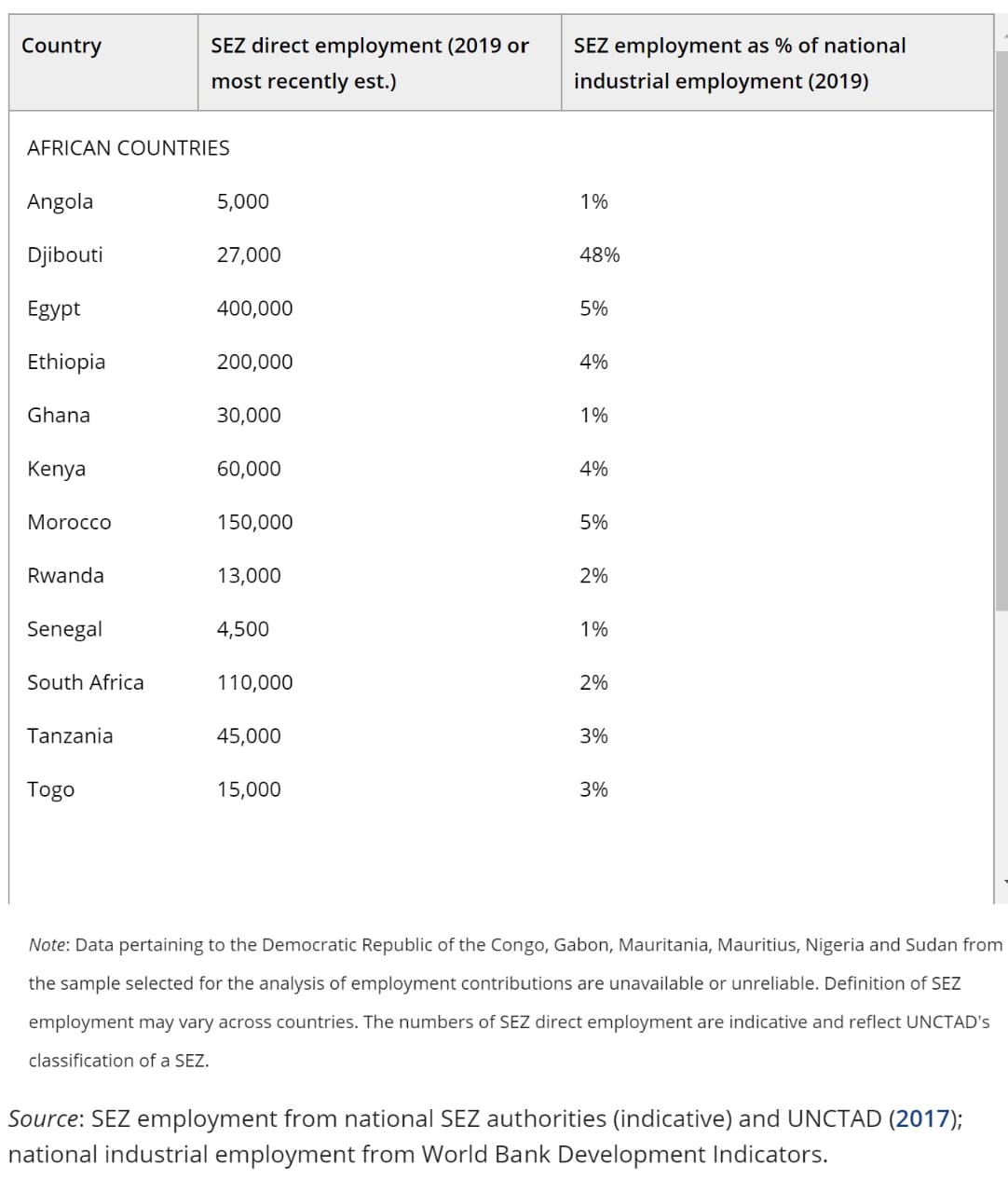
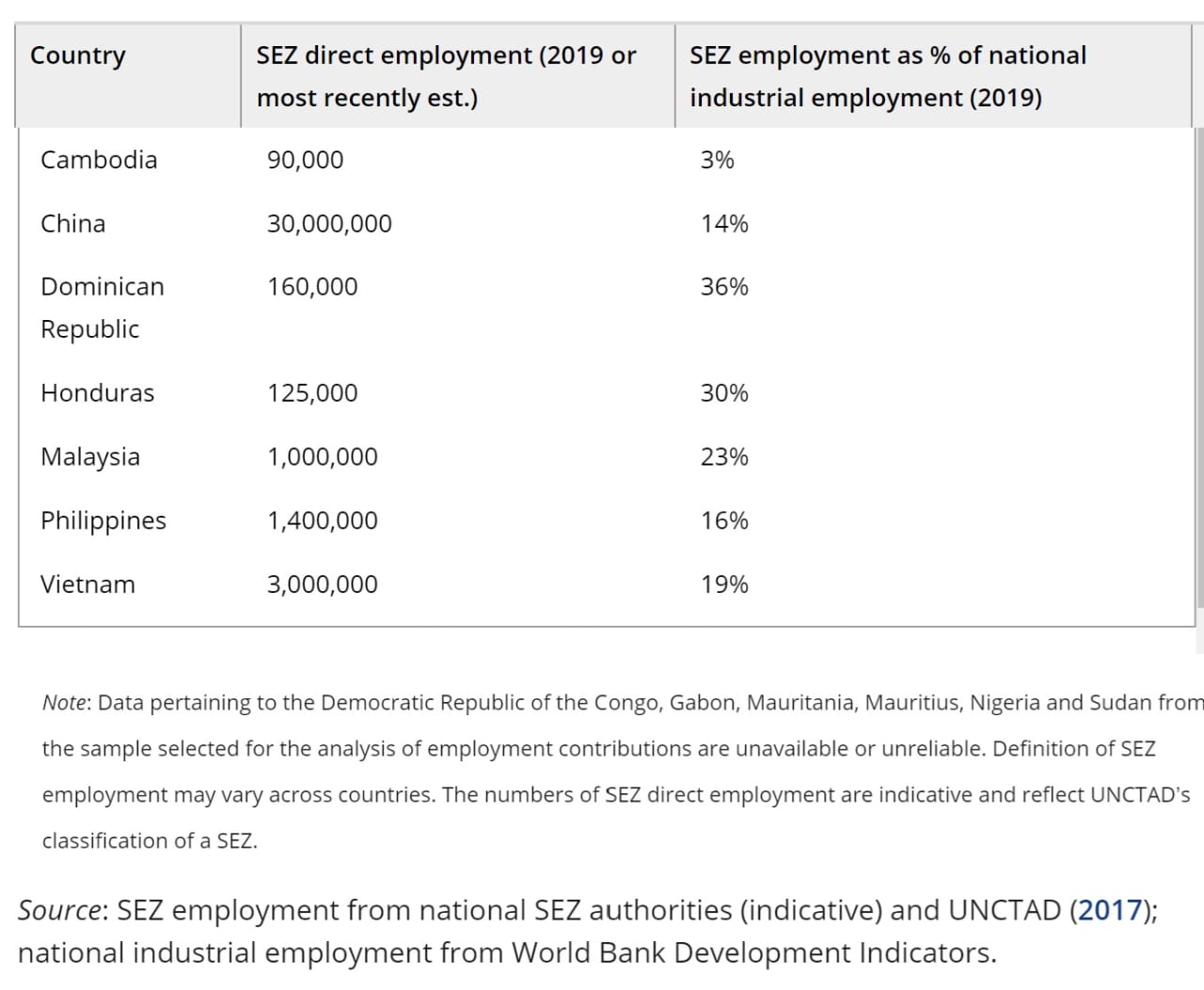
Whereas almost 20% of Vietnamese and 30% of Honduran industrial jobs were created through EPZs, less than 1% of Ghana’s and Senegal’s were. Contrast the ~200,000 direct jobs created by the Dominican Republic or the 1.5 million in the Philippines versus the 32,000 (mostly cocoa and shea processing jobs) in Ghana.
Not surprisingly, the multifunctional SEZs in Africa aren’t functioning any better than their EPZ predecessors. Without the disciplining rod of export competitiveness, compounded by weak infrastructure, the clustering effect of SEZs has dissipated. In any event, for the few willing to brave the minimum export requirement, EPZ/SEZ laws in many African countries allow them to operate from any location of their choice.
The result of this weak policy environment is the empty industrial parks across many of Africa’s 240 SEZs. Dawa, a private SEZ in Ghana, for instance, expected to host 500 companies and create 80,000 jobs (250,000 more indirectly) by now. Today, it has barely a dozen companies employing about a 1000. In Tanzania, SEZs account for less than 3% of national exports. Whereas Vietnam has attracted nearly $40bn in FDI into SEZs, Tanzania is yet to clock $500m.
Chinese State-inspired African SEZs have had a lacklustre run, so private Chinese entrepreneurs are trying another tact. In Ghana, Bright International Free Zone (BIFZ), founded by a former Chinese state enterprise manager, has built an “industrial suburb” in Afienya, about one hour from Accra on a good day, unburdened by any of the policy contests between exports and imports.
BIFZ has large dormitories (resembling the famous Ciudad Morazan in Honduras), an on-site Access Bank branch, a hotel for Chinese engineering expats, and consolidated linkages to “Chinese Malls” in Ghana’s big cities.
By providing low cost amenities and making commuting unnecessary, it aims to make low wages attractive. By ensuring tight integration into culturally compatible downstream supply chains, producers in the enclave, many with overlapping ownership, aim to react superfast to market trends. From tomato paste and processed fish to cement and quarried chips, clustering is induced through intense and pragmatic customer-focus.
BIFZ is thus blending different kinds of SEZ incentives to lower costs and taxes across the network. It is a veritable “productivity corridor” across Chinese sourcing nodes, a domestic suburban industrial hub, and an urban retail complex designed to provide massive competition to both local manufacturers and retailers.
Since copying has been so hard for African countries, and innovation hasn’t been all that forthcoming in this area, it looks like some Asians have decided to come down and show how it is done.
But will they really be operating on a level playing field? BIFZ, for instance, launched with full presidential fanfare and strong diplomatic endorsements.
By: Bright Simons